Monday, July 6, 2020

America 1870-1900 - NATION ON THE MOVE (continued)

We are still on the move and up comes the question of the centennial! I remember the bicentennial. We spent that summer on a cross country trip to see bison. My mom nearly fell off a cliff riding a horse around Lake Louise - pictured!-  and my little sister nearly died of a North Dakota sunburn - sadly, not pictured. I can't locate the picture where 11 year old me has the angriest face ever in front of Mount Rushmore because everyone is paying attention to Katie because of her near death experience and what about MY very bad sunburn? The happiest memory of this trip was painting the dogs' toenails. Yes, that is dogs plural. In a camper. With three kids. It was something. My mother is a saint!

But back to 1876.

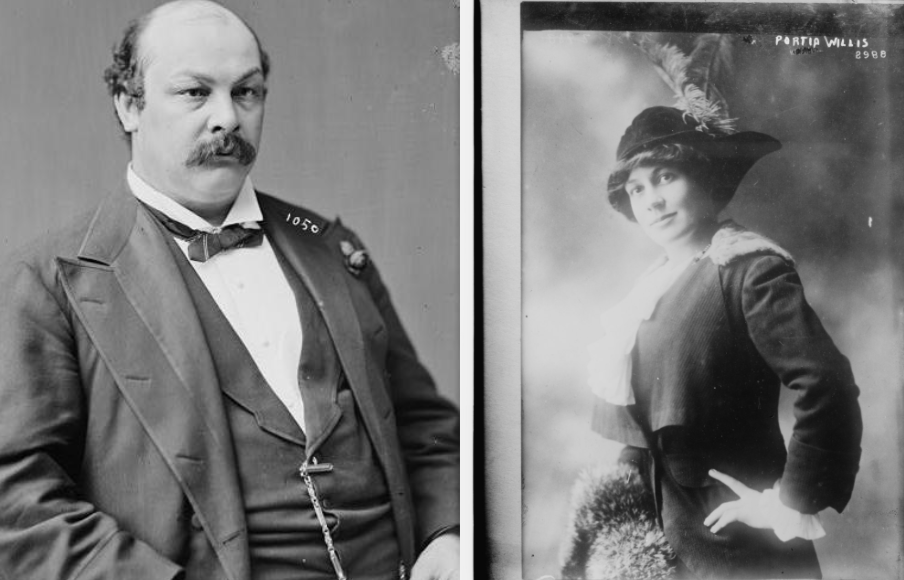
People wanted to have a big banger for the 100th  anniversary of freedom, but not everyone thought it was a good idea. Benjamin Willis a Democratic member of the house of representatives said, regarding the centennial, “Is self-jollification...getting up a grand magnificent exposition, a function of government? Rather than expend money for a jubilee in 1876 we should bequeath to posterity the privilege of celebrating the continued existence of the Republic in 1976.” He was not a fellow who cared about a good time. BUT he was the father of Portia Willis who was a pretty awesome suffragist. (And not mentioned in the book, but I learned about her when Wikipedia-ing her dad.)

It was decided to hold the 1876 Central Exhibition in Philadelphia. The city of brotherly love paid $1.5 and the congress matched it.

“The government is not a republic, but a hateful oligarchy of sex.” Anonymous suffragist, 1876. So women are mentioned! Useful women who aren't going to make good wives! Also in this section we have our first non-white face. He is a dime novel character named “Pomp” which doesn’t seem like positive representation. I couldn't find any info on The Electric Horse by Noname other than bibliographically. I looked up some dime (or half-dime) novels and they were written in dialect that was nearly incomprehensible. And a lot of information about A Horse with No Name that was not related to this book at all.

People - and by people it means white men - were proud to be Americans at this time and described thus by historian Henry Adams. The average city dweller was “a pushing, energetic, ingenious person, always awake and trying to get ahead of his neighbor.” Well, he sounds like a jerk!

The creation of Wrigley’s chewing gum and Brentano’s bookstore are outlined here. Brentano’s died twice. Once in 1983 when it was acquired by Borders and then in 2011 when Borders went under. But I was actually chewing Wrigley’s Juicy Fruit gum when I read that section. Some some things did stick around. There is also a glowing origin story for Buck Duke of the American Tobacco Company. Thanks, Buck, for the 10 years you probably shaved off my life.

So they are discussing how this land of raw material was chewed up and spit out by the greed of men. The land that our forefathers “rightfully” stole from the indigenous people and worked with the sweat of stolen Africans ended up eating its own tail. Right now it kind of feels like our great greed-fueled empire is going down. Maybe it will come back or maybe it is some other country’s turn to be "it". We did a good job for awhile. We got rid of dictators who ruled by right of birth and replaced them with, well dictators who rule by right of circumstances - but every so often, by right of brains, or talent, or hard work and with a large amount of good luck.

This was written in 1970, which is not the world we have now. Back then, no one who was living their best middle-class-white-girl life knew we needed a revolution.  Sure there were feminists, and anti-war protesters and civil rights workers, but their platform was narrow and easy to ignore if it didn’t affect you. Basically, the people who were trying to make a change weren't being heard the way they are today.

Economist Henry George saw it, “Amid the greatest accumulations of wealth, men die of starvation, and puny infants suckle dry breasts; where everywhere the greed of gain, the worship of wealth, shows the force of the fear of want.” Yes indeed.

Up next is law and order. Yikes.


All quotes are from TL unless otherwise noted.
Benjamin Willis. Brady-Handy Photograph Collection, Library of Congress, 1865-1880.
George, Henry. Progress and Poverty. New York: D. Appleton and Company, 1881.
Time-Life Books. This Fabulous Century 1870-1900. New York: Time-Life Books, 1970. 
Portia Willis. Bain News Service, Library of Congress, 1910.

Wednesday, July 1, 2020

America 1870-1900 - NATION ON THE MOVE

We begin our first tome with 18 pages of black and white photographs from 1870-1900. They feature a bunch of white people. They are mostly men doing manly things, but there are some decorative females scattered among them in supporting roles.

Since I believe that I am not going to see any (out) gay people in this entire series and and am pretty sure that many of the representations of people of color are going to be problematic (spoiler - they are!) it seems that women are going to be getting most of the attention from Time Life (hereafter to be referred to as TL) as the least marginalized of the marginalized groups. Also, as a woman, this is the one group I can speak to the struggle of first hand. And oh my, I certainly do!

So I am going to mostly gloss over the decorative and marriageable women except when I have something funny or moving to say about them. (When in doubt, assume I am trying for funny.) If a woman accomplishes something on her own without a man's support I will count her as being "represented" otherwise, she is background noise at best and a representation of the unattainable (and in our modern times untenable) goal of perfect helpmeet with no personality of her own at worst. Okay, that seems harsh, but seriously - it's all kids, virgins, wives and mothers between those covers!

So many photos before page 25 and not a single non-white face. Our first chapter is NATION ON THE MOVE and we are up and at 'em! We've got ourselves a trans-continental railroad!

Before the TCR's completion, it took a month to get from New York to San Francisco by rail and stage. It took 5 months by wagon train from Missouri and you were already halfway there! I wonder if that explosion of movement from the TCR felt like the information superhighway? Interesting parallels, so much opportunity for wealth and oppression.

This would be a good place for TL to begin discussing the "Great Migration" of African-Americans from the postbellum south to the northern industrial cities. But they do not. Perhaps they had not yet read Isabel Wilkerson's masterwork THE WARMTH OF OTHER SUNS. It wasn't published until 50 years later, so I suppose that is their excuse.

It is mentioned that at this point in time, fewer than 2 per 100 “citizens” went to college. Is the number so low because women and blacks are not represented, or would it be even lower in that case? This book has no citations, which just made me very sad. There are photo credits which can help with some identification. I tried to find the numbers and did find a chart from the zippily named National Center for Education Statistics that matches that and does split it by male and female. But the numbers are so low (And the print so small!) that I couldn't distinguish by gender. There was no mention of race in the report from the last 120 years of American Education, because I am sure black and white education rates were similar because of the level playing field and everything...

I am going to end with a terrific and hopeful quote from journalist Josiah Gilbert Holland who was born in Belchertown, MA, wrote a solid Lincoln biography, helped found Scribner's Monthly, and was friends with Emily Dickinson. (I read the Wikipedia page so you don't have to!) “Progress cannot be reckoned in railroads and steamboats, or counted in money, or decided in any way by the census tables. Are we producing better children and better men and women? This is the question which decides everything." I like to believe that this is true, that the human condition is the struggle to be better. I think most people want to be decent, but there are so many factors that can get in the way. I really try to believe in the good in people, but greed and fear and hate are out there and they will have an impact.

Biographical Encyclopedia of Massachusetts of the Nineteenth Century. v.2. Boston: Metropolitan Publishing and Engraving Company, 1883. p. 180.
Snyder, Thomas D. 120 Years of American Education: A Statistical Study. Washington, DC: US Department of Education, 1993.
Time-Life Books. This Fabulous Century 1870-1900. New York: Time-Life Books, 1970. 
Wilkerson, Isabel. The Warmth of Other Suns: The Epic Story of America's Great Migration. New York: Random House, 2010.

Tuesday, June 30, 2020

Intro to THIS FABULOUS CENTURY!


What was the wikipedia of my day? Where did I learn that obscure but interesting history or pop-cultural information that I was so hungry for as a kid? Well, we had the World Book Encyclopedia, of course. My parents were middle class, college educated midwesterners - it was the law! But the World Book wasn't sexy... Don't get me wrong, I would use it for homework and sometimes just to find out about stuff, but it didn't have great pictures and it lacked narrative flow.

However, the Time Life Corporation was on the job! They took the journalistic style and photographic excellence from their magazines and built series of books. which they would send out in monthly installments. I don't remember my parents actually getting these books. They might have have been a little snobby about it. When I asked my mother why they didn't get any of the sets, she said, "We already had the World Book. It had everything in the world in it." Did it, Mom? DID IT???

I had friends whose parent's were less satisfied by the status quo, or perhaps more susceptible to a constant stream of advertisements. And I loved poring over their Time Life books. Even in my current library the World War Two series and the Enchanted World series still circulate.

I was intrigued, when I was looking in the 917s the last time I was shelving, to find This Fabulous Century. This series was published in 1970 - possibly with an eye towards the bicentennial. I don't know how successful it was, it doesn't have its own wikipedia page. But it is of interest to me because it would have been written when I was a little kid - just starting to be curious about America and what that means. The bicentennial had us all patriotism-crazy and this fed right into that vibe.

I don't remember reading reading this series, specifically, so I can't call this a reread, but I am reading this series with purpose. My plan is to read these books with an eye towards representation. I just finished ONE CRAZY SUMMER by Rita Williams-Garcia and there was a section where the three sisters ages 7-11 talk about how exciting it is to see a black face on television and how they kept track of every time Lieutenant Uhura spoke on STAR TREK. They were out of their minds with excitement about the show JULIA that was about to come out. I get this to a lesser degree because I remember never seeing fat people on tv or in movies, unless they were the butt of jokes. Even now, I get excited about a great unapologetic fat-girl role model.

Anyway, since this series was probably the most populist history resource outside of school, I have decided to read it looking for how people of color, women and the LGBTQIA+ community are presented, if at all. This is not to hate on Time Life or that fabulous century between 1870-1970, but rather to see how representation might influence the mindset of people my age and older. These books are 50 years old, I don't expect them to be held to the standards I would require of an overarching American history series today, but I would like to see what the actual numbers are.

Is the black experience reflected here at all? Are women anything other than an appendage to their men? Is the gay experience indeed fabulous enough for this series? One would hope, but I'm not betting the farm. I like to think that we are finally, as a society, discussing the fact that representation matters. As a white, middle-class little girl I didn't have the understanding to even look for female role models, much less POC or gay - so what was the impact on my perspective of history? Let us agree that it was not positive.

So here we go! This will be a look at the narrative sweep that I was presented with as a kid. I will touch on some of the interesting topics that come up, but with the understanding that it was the "agreed-upon" history for so long, and yet it leaves out a great many Americans' experience.

Monday, June 29, 2020

ONE CRAZY SUMMER by Rita Williams-Garcia


On the Betsy Tacy listserv people were asking for recommendations of books that were similar to the BT books and this one came up. At first it seems strange - how can this story of three little girls from Brooklyn who fly out to Oakland, California in the summer of 1968 and end up attending a summer camp organized by the Black Panthers tie to the story of some little girls in the midwest during a time when the most exciting thing to hit town is the first motor car?

And yet...I felt that similarity. The relationship between these sisters is perfectly rendered. As the middle of three girls, I felt these sisters down to my toes! The birth order stuff adds up. Delphine, the oldest, is responsible, bossy and smart. Fern, the baby, is lovable and precocious. And Vonetta, the middle child, is annoying and desperate for attention. 

To be clear, I am a middle child and I am used to the middle child being the BEST in fiction. Betsy Ray, of course, but Laura Ingalls and Jo March also (while not technically middles) were the second born. (I argue that Beth dies and Grace never had a personality so the dynamic is the same.) But in ONE CRAZY SUMMER, Vonetta is the worst. And yet I love her too!

The premise is terrific - three girls who were abandoned by their mother seven years ago are sent across the country to spend the summer with her. Of course this is going to be a beautiful story of reconnection, right?

Absolutely not! Their mother Cecile is selfish and uninterested in parenting. She actually tells them at one point - "I didn't send for you. Didn't want you in the first place. Should have gone to Mexico to get rid of you when I had the chance." WHAT?? These kids are 7, 9, and 11! Delphine, who doesn't understand the Mexico reference any better than they do, explains to her little sisters that Mexico is where rich people go to buy babies. 

Cecile is a poet who takes the girls' Disneyland money to buy food. She only feeds them shrimp lo mein and eggrolls from the local Chinese restaurant. She won't let them come into the kitchen because that is where she works. She refuses to say Fern's name and calls her "Little Girl". To be clear, she is awful. But her emotional void makes the interplay between the sisters stand out even more. And their relationship is beautiful.

The end up getting breakfast at a community center run by the Black Panthers. They spend their days there since Cecile has let them know in no uncertain terms that they are not to hang out at the house all day. There, they learn how to become part of the revolution. The Panthers are described as community organizers standing up for their rights. While conflicts with the police are mentioned in a couple of sections (one of which is heartbreakingly familiar in our current era) the book mostly focuses on the struggle for justice. 

I had never heard of Bobby Hutton before I read this. And I never knew that the Black Panther Party was created in response to police brutality in Oakland. This book focuses on the Free Breakfast for Children program and a rally to have the DeFremery Park renamed for Bobby Hutton - the youngest member of the Party who was shot 12 times while trying to surrender to police during a stand-off. When Delphine decides that it is too dangerous to continue going to the center, she tries to stand up to Cecile and it doesn't go well. Eventually something happens that changes the tone of their summer and ever so slightly changes their dynamic with their mother.

The one plot device that didn't have any traction for me is what those girls were doing out there in the first place. Their mother clearly didn't want them and their father and grandmother were excellent caregivers who kept an eye on what the girls were up to. To send them across the country with no real compelling purpose other than to propel the plot seemed to require a bigger suspension of disbelief than I could work up for this otherwise beautifully authentic story. 

The story is so compelling. On the surface it is classic fish-out-of-water, but there are so many issues touched on delicately that breathe extra life into the narrative. Delphine is 11, but looks older and is expected to act older. She ends up cooking the healthy meals her little sisters need. She is an excellent judge of character and can intuit how to speak to different kinds of grown ups to to get what she wants or needs. She is aware of the ways that many white people respond to her race first and her as an individual second, or not at all. 

In the end, some of Cecile's backstory is laid out and you begin to understand more what drives her, but her story is secondary to Delphine's journey. I know that I am making this sound like a book that is "good for you". I am sure that all the awards stickers on the paperback cover (Oh my gosh, those covers are magical!) already give that impression. But it is also warm, exciting and hilariously funny in parts. There's a reason for all those stickers!

This book is in my all time top 10 middle grade books and now I am off to go read the two sequels and anything else Ms Williams-Garcia has written!


Monday, April 20, 2020

Beehive Fails and Beverly Cleary!

 I just made my first beauty tutorial! It is really for work. While we are hunkered down, I want my students to know that I am not afraid to try new things. Although perhaps I should be!
My previous videos during the covid lockdown are housed on a blog I have used for school Book Splat but I also wanted to put this one here because for a very brief second you can see a copy of WHERE THE GIRLS ARE by Susan J. Douglas which I adore! And also some Beverly Cleary talk at the end. 
Happy 104th, Mrs. Cleary!!


Thursday, January 23, 2020

FRIDAY'S CHILD by Jane Lambert


Not to brag, but the cover on the right is my very own which looks clearer than the one on the left. Not even a professional book photographer! But enough about that...

BIG NEWS!! This is where worlds collide! This is a Jordan family book, but guess who some of the secondary characters (and one particularly dreeeeeeeeamy secondary character) are? THE PARRISHES!!

When we left the Jordans there was a war on, their Dad was gone and Jennifer was in charge of everything. Now Dad is home, they have just moved to Governers Island where the Parrish family lives and Jennifer is still in charge of Everything. Tippy and Bobby are their neighbors. And Penny and Carrol and their dull husbands and superfluous children make an appearance as well.

The main focus is on Alice, who sometimes goes by Alcie which sounds cuter in my head than it looks on the page. It looks like a salve for eczema in print. So Alcie is our heroine, and her foil is her sister Gwenn. Which is rough on her because she loves Gwenn, who is her only living blood relative. (General Jordan is their stepfather, their Mom is dead and the little ones are their half-siblings.)

Also, Gwenn is completely nuts. Well, she is definitely a narcissist and possibly a sociopath. I read about these things on the internet so I can diagnose her with complete confidence.

Once again, I have done chapter recaps as I read and will transcribe them here. But before I do, I found that those of my books that aren't library copies are inscribed as gifts! This one just says To Carolyn with love from Carole. Here, it looks like this -
Isn't that pretty handwriting? I will have to go back and look at other inscriptions and put them in the recaps.

The dedication is thus. "To all those girls whose letters I have been unable to answer, this book is lovingly dedicated. Janet Lambert" That's sweet!

Away we go-

CHAPTER 1
The Jordans are on Governers Island. Gwenn is still a snot and Alice is still lovely. Jennifer still mothers them and the rest of the family is much as we left them at the end of JUST JENNIFER, except Peter who is at West Point. It opens with Gwenn and Alice at the pool where Gwenn gets all pissy about how no one was talking to them. She's got issues. I am pretty sure I have spotted Tippy and her brother, but it might be some other gal. Stay tuned! (Well, I already spoiled that surprise...)

CHAPTER 2
Tippy it was! And she's having a gathering of her crowd to meet Alice and Gwenn. But Gwenn is being a troll and won't go. The boys are disappointed because Gwenn is HAWT, but they welcome Alice while Gwenn sulks upstairs. 

CHAPTER 3
Alcie is raring to become part of the post social whirl, but Gwenn is claiming her lousy manners are part of being an artiste. Bobby shows up last minute at a party Alice throws and because he is there, Gwenn comes downstairs and charms Bobby, of course. Stupid boy.

CHAPTER 4
There is a swim meet and Alcie and Bobby want to meet a blowhard named Pugs Bonham - which is an awesome 60s British rock star name! However, things do not go as planned when Gwenn finagles a ride to Manhattan from Bobby to pick up some papers at Barnard for Jen. This is an unnecessary fool's errand and makes Bobby miss the meet. Pugs beats Alice and everyone hates Gwenn.

CHAPTER 5
Gwenn is a narcissistic monster, but Alice loves her. She is conflicted because the crowd hates Gwenn, and she feels badly about leaving her out. Not that Gwenn notices. Tippy ADORES Alice. She invites her to the city, but Alicie says no because Gwenn isn't invited. When Mrs. Parrish and Tippy suss this out, they include Gwenn and all is well. They take the girls to Hardi's (Sardi's?) for lunch and then to see SECOND FIDDLE - Penny's successful play. Alcie cries like a baby because she loves art and Gwenn pictures herself as the star of the play because other people don't exist for her. Also, the girls are rich, so that's nice.

CHAPTER 6
Apparently this chapter was filled with conflict, but it felt like exposition to me! Jennifer got a letter from Cyril, now 21, who wants her to go to England with some of the kids. She doesn't trust that he really loves her, he thinks he is just lonely. She is going to go to West Point to visit Peter. Gwenn wants to go but is too young. She appears to be planning something. Quelle suprise. 

CHAPTER 7
Jennifer is getting ready to go to a kick ass party at the point. It is called Illuminations and everyone goes in costume and there is fire. I don't know, it was a different time... Gwenn isn't allowed to go because she is a sociopath. I mean, too young. Once Jennifer leaves, Gwenn decides to sneak up there too. And Alice desperately needs a xanax. 

CHAPTER 8
GWENN SNEAKS OFF TO THE POINT!! She is so naughty... She just doesn't care about consequences at all. Alice chases after her. I didn't really know why at first, it is the Point, she will probably be safe. (Later I realized that Alice didn't want Jennifer's big weekend to be ruined by having to take responsibility for one more freaking kid. Alice is VERY thoughtful.)  There is something really wrong with Gwenn. It is surprising to me that Janet is so forthright about it. This book is about dealing with a family member with mental illness in the way that CANDY KANE was about surviving childhood abuse.  It is kind of jarring with all the time appropriate other stuff to see - wow, people were dealing with dysfunctional family issues back then. Usually we only see the happy side, particularly in 1940s YA books.  I wonder if Gwenn will be redeemed like Leigh and Marcia. 

CHAPTER 9
Alcie finds Gwenn at the hotel and brings her home. Something is really wrong with Gwenn. Lambert describes her internal monologue on page 108 and it's terrifying! Did I ever feel like that at age 15? I can't remember. Harry Harkins, the cadet Gwenn picked up to take her to the dance ends up being a very nice guy. Although he is 23 - WAY too old to be squiring Gwenn around. They see Jennifer at the illuminations from a distance and then head home. 

CHAPTER 10
Gwenn needs an inpatient program, but since it is 1947 she is going to boarding school instead. She enjoys making Alice feel bad and tries to guilt her into going to boarding school too, but Alice fights back! And with the encouragement of Bobby Parrish, she sticks to her guns. Also, the girls are invited up to the farm to see Penny, Josh, Carrol and David. How fun! Also, I love that Bob is impervious to Gwenn's charms now. Those Parrish kids grew up all right!

CHAPTER 11
The girls go to the farm and Gwenn falls IN LOVE with Penny. Finally there is someone who understands her. She pretends to be Penny that night and everyone is charmed by her. Then they go to a carnival and Alice gets stuck on the ferris wheel for no good reason. 

CHAPTER 12
They go do farm work, but the important content here is the conversations. Penny breaks down Gwenn like a pro and Gwenn sees that Penny "gets her" and really opens up. Bobby realizes that he likes Alice because she "minds him" but she is stronger than he realizes. 

CHAPTER 13
Penny sets Gwenn up with Marenka Savatskya - a famous dancer and lunatic. She is artsy as hell, but gives Gwenn hope that she could become an excellent dancer with the right training and sets her up to train with Gradorviski - the greatest dance teacher in all the land! So now she's not going to boarding school and we find out that no one wanted her to go in the first place. Also, Cyril's coming back from England and Jennifer is the best. 

CHAPTER 14
Things are on an even keel. Tippy and Alice are thick as thieves. Gwenn is rehearsing all the time. Jennifer is entertaining soldiers, in a nice way. Then Cyril comes back! He is handsome and loves Jenny and vice versa. He proposes for next June. Also there are hijinks with a horse. 

CHAPTER 15
There is a dance planned for Tippy's 15th birthday. Alcie doesn't have anything to wear other than a "baby dress" so Jennifer sets her up with her best blue dress on loan. Gwenn is ridiculous and says she won't go to the dance because Jennifer didn't offer the dress to her. She is getting a little better, but is still not fixed by a long shot. Anyhoo- the clothes all work out. Bobby sends Alice 3 gardenias and it is adorable. Alice also tells Jenny to marry Cyril and she and Gwenn will take care of everything at home. The dance is glorious and Lambert does a terrific job of illustrating that teenaged feeling that - even when you are having the best time ever [Alice] with the cute boy of your dreams [Bobby] still worrying that it'll never last. Luckily, Bobby is a smooth operator and invites Alcie, just her alone, to drive to high school with him. Nicely done, Bobby. And Janet. 

This is a favorite! Next up MISS TIPPY!

Tuesday, January 7, 2020

ONE FOR THE MONEY by Janet Lambert

Well I am just booking along here! Less than two weeks since I finished the long, slow slog of PRACTICALLY PERFECT!

We are back with Miss Candy Kane who is currently living outside Los Angeles with her mother while they wait for her father to return from Europe. Barton, Candy's beau, is still overseas as well.

As I read the book, I took less copious notes than usual and wrote a chapter recap as I went along. I believe that is going to be my m.o. from now on because I do want to finish these books before I become old an infirm. Or more old and infirm, to be precise...

What follows are my chapter recaps.

Chapter 1: Candy meets a horse and an old guy.

Chapter 2: We learn Jeb's (the old guy) and Mr. Smith's (the horse) history. We find out that Marcia (Candy's mom) and Leigh (Candy's sister) are still overly concerned with Candy's looks. And we find out Candy is brave as hell and helpful as an angel as she begins helping Jeb train Mr. Smith to race. But we already knew that.

Chapter 3: Candy has to choose between a promise to Jeb and picking up Barton at the airport. She makes the hard choice not to disappoint the old man because she's Candy Freakin' Kane. And it turns out alright.

Chapter 4: Dinner at the Kanes. Barton fears nothing except for Marcia and he had a rough time in the war but doesn't want to talk about it. Also, Marcia knows nothing about horses.

Chapter 5: Barton is a jerk to his mom and passive aggressive with Candy. Candy can't ride for beans and hires a trainer for Mr. Smith. She doesn't trust this trainer, though. The plot thickens.

Chapter 6: Leigh is feeling emotions and it is freaking Candy out - she should be suppressing them! Basically Chris is writing a novel so they are dirt poor and Leigh just scrubs shit all day and never gets to go do anything fun. Candy and Barton go to a swanky L.A. party and Candy sings to raise money for Mr. Smith. Because she and Bart know how to have fun AND take care of business.

Chapter 7: Leigh and Chris have a huge fight and Leigh runs home. Candy refuses to play peacemaker because it is useless with these two. So she tells Leigh to run away to New York with Marcia to meet Mr. Kane (he has a rank of some kind, but I don't know what it is anymore) as he returns from the war. Candy and Nanna are going to have a grand time without those drama queens.

Chapter 8: Mr. Smith's trainer is up to some nonsense, Candy and Barton are sure of it. They are watching him! Meanwhile, Alex Nelson, an old friend of Candy's from her war bond days, is visiting the Reed's and Anne appears to have set her cap for him.

Chapter 9: It is Mr. Smith's first race and Jim Tyke, his trainer, is a crook! He had the jockey hold Mr. Smith back so another horse could win. EVIL!!!

Chapter 10: Candy goes to a sketchy nightclub and sings in a tiny costume to audition to make money for the upkeep of Mr. Smith. Clark Milland, bandleader and charmer, tells her she is too good for that and loans her $500. If Janet Lambert is this freaked out about swing music, what is she going to make of rock and roll?

Chapter 11: Candy reveals to Barton that if Mr. Smith doesn't win his next race and she can't pay the money back to Clark Milland, she will have to sing for her supper. This smacks of a career to Barton and he loses his fragile male shit and runs away.

Chapter 12: Candy starts working to get Jeb's grandson Sonny home from overseas so that he can ride Mr. Smith. (He is a jockey as well as a grandson.) She also gets hit on by Alix and declines. (Sisters before misters, pal!) But mostly she pines for a whiny man-baby named Barton.

Chapter 13: So many good things happen this chapter! Chris calls Leigh home - he's decided not to be a beatnik after all! And Sonny comes home and everyone is overjoyed. But Barton's absence is still busting Candy's stupid heart. She needs to hook up with Sonny. Even if he is shorter than her. Just kidding, everyone knows you can't date a boy shorter than you. It's the law.

Chapter 14: Wow - more good news! Barton comes back eating some crow and is now a civilian Also, Mr. Smith wins his race. This book might just have a happy ending after all!

Chapter 15: In a whiplash inducing twist, Jeb has a heart attack at the track, but he does not die. Bart and Candy talk frankly about what they want in their future marriage and determine that their life together will be perfect. Good luck, Candy. You'll need it.

This is the first Lambert series that I have completed! So long to Candy Kane. You're a good girl who puts others before herself. Make sure you do what is best for you, though, Candy. Your early years of abuse from your awful mother and sister have made you a bit codependent. Fortunately for you that is perfect for being married to Barton. He's ultimately a good guy I think, but he needs a lot of attention. You crazy kids will make it work.

Sunday, December 29, 2019

PRACTICALLY PERFECT by Janet Lambert

My goodness, it has taken me a long time to get through this one! I started it on November 9 and it has been nearly two months getting through it! This is no indicator of the quality of the book, I quite liked it, but rather on my attendance at the gym. I only read the Lambert books after I have worked out when I am sitting by the pool trying to recover. The holidays have played hell with my improvement efforts...

There appears to be only this cover version. At least according to the Google. I was hoping for some salacious paperback cover that I could mock. Alas...

So let's get to the story shall we?

It begins with our Penny still enjoying her role in THE ROBIN'S NEST. She is living in New York with Carrol, who is waiting for David to return from overseas. 

There is a phone call for Andrea. Who the heck is Andrea? Well, it is actually Tippy who is now 12 and absolutely adorable! She is being called by Chubby who is asking her to a school party. Things are heating up for Tippy! The rest of the Parrishes are living on Governors' Island in New York where Colonel Parrish does some important military stuff.

According to Josh who know EVERYTHING, it is time for Penny to start looking for a starring vehicle for herself, or rather, have him look. He is so masterful.

David has been saying in his letters that he wants to be a farmer, work with Joe and Letty (who are working the farm while Carrol is in New York) and then start them off on their own. Carrol is down with this.

Long story short, David comes home and all is well. Penny and Josh go out on the town and she gets some press for talking to General Wainwright - a real person! How interesting... and she realizes she is in love with him. Josh, not General Wainwright

There is a house party. Carrol and David find a farmhouse/inn that they buy. Mike and Terry - Penny's former beaux - are there and it looks like Michael is going to end up with the boss's daughter (he's in insurance or something boring, perfect for him) and Terry is going to end up with a slightly redeemed Louise. This is good because Penny and Josh end up getting married at the end. [Spoiler!]

There is some nonsense before that where she takes Tippy and Bobby to New York City to talk to another agent about something she saw in the gossip columns. It is an adorable scene where we get to see T & B practically grow up before our very eyes. He is with another girl, but we find out later he is trying to get financing for a play he and a pal have written specifically for Penny. 

Carrol and David (who are very, very rich remember) end up financing the play and we don't find out if it is successful, but I imagine it is. They also help Josh buy the house that the bought earlier in the book for he and Penny! And they furnish it as a wedding gift. That Carrol loves spending her money on other people. It is one of her finer attributes. I actually love Carrol. She is the perfect post-war wife. 

This is completely out of order so I will just add that Terry (before he gets the old heave-ho) keeps calling Penny "lamb child" which sounds creepy as hell. And we find out that Josh is 12 years older than Penny which also seems gross, but at least he has the good sense to feel weird about it. 

I really enjoyed this book, but I am having a hell of time piecing together the narrative. Suffice to say it ends up fine. 

Now back to Candy Kane, then the Jordans and then who knows what! But I know this is not the last we will see of Penny.

Monday, November 11, 2019

DOWNTOWN by Maud Hart Lovelace Chapter VII - A TRIP TO THE LIBRARY.

To celebrate the last day of my birthday week I am going to do a recap of the most perfect chapter in all of literature!

It begins early in November. I just checked a 1905 calendar and the second Saturday was November 11. So today is the 114th anniversary of this spectacular day!

Betsy decides to wear a pretty hat (pictured) and her regular stockings - no hood, leggings and overshoes for our fashionable girl! She grabs Julia's fancy pocketbook and says goodbye to everyone on Hill Street. Tacy is her final parting. Tacy, as usual, is a brick and makes Betsy feel good about going by herself.

The library is described as a "small white temple" and there is a cage in the center. Betsy cases the joint as she has never been in a library before. Imagine being able to pinpoint the first time you were ever in a library! There is a mole covered woman with messy hair in the cage. I am not kidding - that is how she is described. We know that she is a LOVELY young woman with a "cozy" face - but the mole and the hair are mentioned... This is Miss Sparrow. And it is one of the best days of Miss Sparrow's working life because she is about to meet a girl who was born to be in a library!

They discuss "the classics" and Betsy learns the wonders of the children's room. There is a picture of THE ISLE OF DELOS in the room and that is a sweet easter egg for those of us who know the name of the love of Maud's life. There is a bit of hand-selling books from Miss Sparrow and then Betsy sits by the fire to read.

Betsy is the picture of mindfulness as she looks around to appreciate where she is right now. When the lunch whistle blows she comes back to real life from her books and heads out to dine.

She goes to Bierbauer's bakery and has a bologna sandwich because we are soul mates! There is a cute bit about her wondering if people aren't surprised to see a young girl her age eating alone. She smiles at everyone who looks at her and is smiling most of the time. So adorable, this early independence.

My favorite line - "Betsy returned to her chair, took off her coat and hat, opened her book and forgot the world again." Story of my life!

Betsy had been hoping it would snow so that she could go to her dad's store and catch a ride home with him, but she is attacked by strange boys armed with snowballs. Her vain decision to not wear winter clothes and carry a pocketbook come to bite her in the butt as she gets pommeled. At one point "snow oozed down the collar of her coat" which is the most horrible thing about winter, bar none.

Luckily Mrs. Poppy and Sunny Jim find her, They talk of revenge and Tib and Mrs. Poppy invites her to the hotel where she lives to dry off. This sets off a chain of events that make this the sweetest read of them all.

Sunday, November 10, 2019

UP GOES THE CURTAIN by Janet Lambert


I can't even begin to describe how much that picture of the Tempo edition disturbs me. Why must it be askew? I love the hardback cover, though. Penny's dress is to die for and Josh is dreeeeeamy! He has lots of bones in his face according to Tippy in PRACTICALLY PERFECT which I am currently reading. Spoiler: I now love Tippy. She barely shows up in this one, which is thoughtful of her.

Let's get started, shall we?

It starts up with a really sweet set piece where Penny meets, Letty, who is waiting tables in New York City while her husband is away at war. They strike up a very exposition-y conversation wherein we learn that Penny has a role in a BROADWAY PLAY!! She begins rehearsals in three week and is lonely because the rest of the fam (who she describes to Letty - and the reader) is at Fort Knox. Letty asks why she doesn't just go visit for those weeks and Penny, realizing that Letty is a genius, makes plans to meet up with her when she returns. 

Terry Hayes makes an appearance, but is surprisingly non-amorous and noncommittal about meeting up with her at Knox where he is also heading. The reason becomes clear when Penny meets his new gal-pal the vixen, Marcia McMain. Or as I call her Louise 2.0. She's dreadful.

INTRIGUE ALERT!! Okay, I'm just going to break it down. Marcia is a spy, Penny catches her. If it weren't for Penny Parrish, we might have lost WWII, just saying. The story is surprisingly tight and it really got me thinking about female spies working for the Axis in the US and how you never hear about them. I did some investigation and found very little. And also, Lambert can write suspense. Who knew??

So Penny goes back to NYC with Carol because Dave and Colonel Parrish are getting called up. It's sad. But Letty helps. She has been living on her own since her Joe left and is a trouper. She helps Carrol keep a stiff upper lip and is soon living at the apartment with Pen and Car. (The scene where we see Penny show up at the diner to take Letty out to dinner from Letty's perspective is really adorable. And moving. Well done, Janet.)

Then there is some stage drama - Penny tries to make friends, people gossip. There's a funny gay boy playing her romantic interest who keeps trying to upstage her. (No, of course it isn't said outright, but come on...) And then there's Josh. Not only does he seem to dislike Penny, he also hates AMERICA! He gets mad when Penny stands at attention for the national anthem. What a jerk. He's not even in the service!

The play goes to Boston, Terry comes to visit and doesn't propose because he knows Penny has her defenses down and would say yes. He's a good boy. They open on Broadway and Penny is a hit. Huzzah! There is some nonsense with her costar that causes a fight between Josh (he's the stage manager, I think) and Mr. Goss, the director and Josh gets fired for sticking up for Penny!

That's it, our girl goes after him and cracks him like a nut. Turns out he grew up poor in a theater family. His mom died young, his dad was a flake and Mr. Goss is his "Uncle Dad" his dad's best friend who essentially raised him. He worked in the theater and was getting a name as a respected director. When the war started he went to the army and wanted to fight like a real man, but ended up directing shows, like a sissy. Lambert, to her credit, has Penny put forth some propaganda about how keeping morale up is as important as battle. He ends up going bonkers and gets kicked out, hence he hates the army. And by extension America and Penny. Til now.

They bond, Carrol has a baby and Michael gets shot down over Germany. 

Do you remember Michael? He is the one from West Point of whom I said "I am almost sure he is going to die in the war because somebody has to and we like him but ultimately don't care what happens to him. But I could be wrong." And there you have it, I am a genius.

I shall leave you with that cliff hanger. Gosh, I wonder what happens. 

Wednesday, October 16, 2019

JUST JENNIFER by Janet Lambert

Oh Janet, you just don't care if you break my tender heart, do you? You put kids in all kinds of peril in the middle of a war and you pull it back just as it gets unbearable. 
Let's look at the things Jennifer Jordan (henceforth referred to as JJ) has to deal with, shall we?

  • 8 siblings of the whole, step and half variety 
  • one of whom is horrible (the mostly wretched Gwenn)
  • one of whom is completely forgettable (Vance who I had to look up when he was mentioned at the end because I completely forgot he existed)
  • one of whom is an orphan who may or may not have been in the car when his parents were killed
  • a father who is away working for Uncle Sam
  • a housekeeper who has zero work ethic
  • a hired girl who has the IQ of a can of spam
  • a neighbor boy with PTSD who requires lots of attention
  • PTSD-boy's snooty aunt
  • a landlord who is always in her business (just kidding, he's the best)
  • a wedding to arrange
  • a wife to murder
  • and Guilder to frame for it

The poor girl is swamped!

Okay, the last two were The Princess Bride but still, you get the idea.

JJ is great. She is raising all these kids with very little help. She uses her army-brat know-how to keep them in line. The kids are pretty awesome, too. Their favorite game is Orphan Asylum. Considering that 3 of them are complete orphans, this is a bold stance. 

She talks Mr. Caldwaller, a widow who has an empty house that used to belong to his now dead son, into letting them rent the place when their housekeeper bolts and JJ decides it would be better to live by a lake. I think maybe she has an internal understanding that the family would be good for Mr. C and he for them. And she is right.

Mr. C has a daughter, Lacey, who is a beautiful school teacher who loves the kids and acts as a surrogate big sister/Auntie to JJ. There is also a handsome Lieutenant who comes around pretty regularly and Lambert uses a play from her Candy Kane book and pairs up these two kindly young adults prettily. (Oh, spoiler, they get married at the end after an adorable courtship with the requisite misunderstanding.)

The PTSD boy is Cyril, who lost his adored older siblings in the London bombings. He also has some metal in his back but is dying to get back to Merrie Olde so that he can get "in the action." His Aunt is a Mrs. Claypool type of the highest order who just wants what is best for the boy, but is terrible at figuring out that it is JJ. 

There is also a tutor and some assorted maids and butlers, one of whom has an egregious brogue, but is a wonderful, motherly type. 

The story centers around JJ taking care of every freaking thing. Then she gets sick and everyone realizes how much she does for them all and they help her get well. Cyril is in love with her, natch. Auntie doesn't approve, of course. But everything works out in the end. Even though Alice (my fave) breaks her collarbone and almost can't go on the big trip to New York after the wedding. (And a declaration of love from Cyril to JJ and a chaste kiss.)

There is also a nice bit about how Donny (the brother/cousin who lost his parents in the car crash) begins to hero-worship Cyril, which is just what the sad sack needs. 

Also there is a horse and Cyril is a Lord. Not the messianic kind, but rather the English kind. Don't worry, but the end of the book he decides the only good titles are earned ones like "General" and his hair is as short as any, by God, American boy in Florida.

This book was lovely and all those kids are destined to be plot fodder for more Lambertian shenanigans later on. I look forward to reading about all of them. Even Gwenn who is spoiled and selfish, although she does get a little redemption at the end. As we all should.

Back to Penny Parrish next time - on Broadway!

Thursday, October 10, 2019

WHOA, MATILDA! by Janet Lambert

I just can't get my Matilda's to line up. Kind of the same problem Candy and Barton have...

So we have a time jump here. Our little Candy Kane is now a senior in high school. She is living in DC with her parents. Her dad is doing importantly, manly war work, her mom is volunteering like a crazy person. Leigh has married an officer and is living in California. Cleoretta is still with the family and Candy arranged a marriage for her with Joe, the elevator operator, in spite of him being desperately in love with Lieutenant Colonel Kane. Seriously, Joe thought 'he was the handsomest mane in Washington."
Turns out LC is headed for North Africa along with Leigh's husband and Coop - the young officer Candy fixed up with Jane in the last book.
Barton comes up to Washington, just a buck private, in spite of his father being a big muckety-muck in the service. He dropped out of West Point and is hoping to become a flier.
The ladies end up going down to the Fort Benning area, which is where Barton is conveniently stationed. He stores his shit-heap of a car - Matilda - with them at Jane's ancestral home. There is a baby who is cute and not yet annoying.
The story concerns itself with Candy and Barton's nascent love affair. (No tongues.) and Leigh becoming less of a beast and starting to do for others.
Candy is really good at singing God Bless America and is invited to Florida to get people to buy bonds with her talent. Barton proves himself less of an ass by knowing how to interact with his betters and eventually gets sent to flight school. Coop loses a foot.
I loved how Marcia completely lost her marbles when LC Kane got called up. She was a basket case and it was a nice comparison to when the Parrish parents dealt with the same thing calmly. I found it interesting how this was basically propaganda for food rationing and what a great idea it is. (Gas rationing, however sucks, because Matilda is always hungry for fuel.)
The parts where Candy has to be zany to get an audition with a famous bandleader are silly, but ultimately pay off when she gets to go on tour. Even though she doesn't appreciate it.
Corp comes home and the Kanes are going to move back north or some such nonsense, it will become clear in the next CK book which seems that it might be horse-centric. I don't really care.
So what we get from this is that war changes people, usually for the better if you don't count missing feet and Candy is the one that makes the world go around and Barton is still pretty much a man-baby dud.